Articles
Skip to content Houston, we have a problem.
During the reigns of Trump I and Trump II, the United States has suffered catastrophic damage. President Trump engages in deliberate cruelty. He and his cronies plunder the wealth and honor of the United States for personal gain.
Our national Humpty Dumpty has had a great fall - and is falling further with each passing day.
One wonders whether all the king's horses and all the king's men can put our national Humpty Dumpty back together again.
 What is the goal of our American Tribunal?
That goal is to re-establish a nation that is honest and just, to recoup larcenous gains, to compensate and restore those who have been harmed, to repair broken institutions, to punish those who have acted in violation of our laws and the laws of nations, and to deter future bad conduct.
These are general expressions; they are not adequately specific.
So let us begin to break that down into more specific elements.

Before getting into the American Tribunal, we should remember that there is much that may be done now, without the need for this proposed tribunal.
The ideas below may be put into action today, before the end of the Trump/MAGA era.
In some cases these ideas may be put into action simply through private choices without the need for any action by a court of government body.

The new, incoming administration can do many things before the tribunal is established.
We saw how "Project 2025" set out a roadmap for the Trump/MAGA administration. We can do the same.
This article deals only with steps that can, and ought, to be taken as soon as possible. The list of other less exigent reforms, including considerable reshaping of parts of our Constitution, are not discussed here.
These steps can begin as soon as Congress begins, at noon (Eastern Standard Time - EST) on January 3, 2028. Congress can begin by establishing rules to allow for emergency and expedited procedures and preparing bills to be passed and submitted to the incoming President immediately after the Inauguration.
The next tick of the clock is at noon (EST), January 20, 2028, when the new President takes office. The new president can issue executive orders, military orders, and other administrative orders right from the inaugural platform. Some of these will have to be put into immediate effect to prevent the expected theft of United States property and documentation by the outgoing administration.
Within hours after the Inauguration, the new Congress can enact pre-written bills, resolutions, and articles of Impeachment.

A tribunal is a court. But it is not an ordinary court. In this discussion, a Tribunal is a powerful court designed to handle extraordinary situations.
Our American Tribunal will face many problems. Among these are its foundation of authority, its limits, its procedures, and its powers to impose corrective, remedial, or punitive measures.
Human history is filled with different systems to evaluate accusations, weigh evidence, and make judgments.
Many of these systems, such as trial by ordeal, have disappeared. (No one shed tears over their extinction.)
On the other hand, other judicial systems have become the norm. These are usually systems in which a panel of disinterested people evaluate and weigh facts within a procedural context overseen by a disinterested judge (or panel of judges.)
Such is a tribunal.
It is traditional in common law countries (and the United States) for the judges, during a trial, to act largely as referees rather than being actively engaged in examination of witnesses. In other countries, judges are more active, more inquisitorial, directly examining (and cross-examining) witnesses. That latter form tends to reveal to the public a more complete picture of events than the typical United States procedure, which is more subject to information-limiting agreements between prosecutors and defendants.

This article is the core of this website. It is also the most difficult to comprehend because some of the concepts are either beyond normal US Constitutional understandings or are subtle.
It is safe to say that most of us do not want to engage in the kind of unprincipled, unguided, unlimited chaos that we call a "revolution".
Most of us would prefer that there be some guiding stars and an established, even if vague and uncharted, framework in which changes are made.
That means that we need to look for hooks that we can use as sources for authority to confine the scope of our Tribunal to conform to those authorities.
At first glance, there seem to be few such hooks in our national organic document, the Constitution of the United States. On this website, we will look more deeply. And (foreshadowing) we will find that the United States does in fact have the authority and jurisdiction for a tribunal that is both powerful and wide in scope.

There are several paths we can take.
- We can act together as "the people"
- Various states can act separately or in combination
- The Federal government can act.
These paths are not mutually exclusive.
But all are difficult.

The American Tribunal is not without substantial risk.
There are many who support, with almost religious fervor, the Trump/MAGA regime and Donald Trump himself. These people may, and many probably will, have strong reactions to the Tribunal, especially after it begins its work.
These supporters have shown, such as on January 6, 2021, that they are willing to use mass violence.

A tribunal can't simply be wished into existence.
It must be created and organized; it must be filled with people; it must have a place to operate; it must have resources, and it must have money.
So how do we actually assemble the proposed American Tribunal?

The laws of physics tell us that a body in motion will continue in motion and that a body at rest will remain at rest unless a force is applied.
Human nature is similar - most of us will not undertake a dangerous or uncertain act if we had to begin it alone. We humans like the comfort of company, of a joint enterprise.
So, given that this American Tribunal is both dangerous and uncertain, how are we going to move from talking to actual action?

Political and legal entities need procedures, and they need to comprehend their limits.

In our legal system, we divide cases into two large classes: Civil and Criminal. Civil law is intended to be mostly curative. Criminal law is aimed at punishment of past acts and deterrence of future acts. In our legal practice here in the US the Civil and Criminal systems are almost entirely separate.
Should our American Tribunal retain that hard distinction between Civil and Criminal?
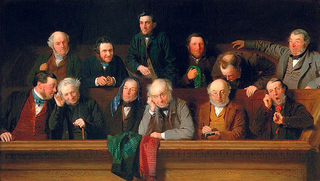
A looming question: should these trials be decided by a judge (or panel of of judges) or a jury?

Humpty Dumpty sat on a wall,
Humpty Dumpty had a great fall;
All the king's horses and all the king's men,
Couldn't put Humpty together again.
In law, the word "remedy" encompasses all the means that a court has within its power to attempt to cure the harms that the defendant caused to the plaintiff.
The legal system recognizes that not all harms can be fully cured nor the status quo ante restored.
In our American Tribunal, we must recognize that we cannot fully remedy the harms caused by the Trump/Maga government.
But we should strive to do what we can.

The Constitution of the United States, along with centuries of statutes and judicial case law, has created many protections for those who are accused.
There seems to be no reason to disregard that history; however, given the evidence-hiding opportunities that were available to the defendants, perhaps some rules may need to be modified or relaxed.
Many defendants will have significant worldwide assets. These defendants may be significant flight risks.

One of our goals is to prevent a recurrence of the Trump/Maga Era (TME).
There are two general methods:
- The carrot: Create a reward structure for those who avoid repeating the act in the future.
- The stick: Creation of a credible fear that there will be serious consequences should the act be repeated in the future.
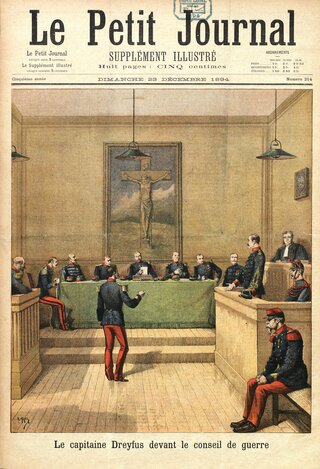
We can anticipate that many of the events of interest will be complex.
Investigation will be difficult. And much will be hidden around the world, beyond United States jurisdiction.
Cases will often be complex. Many of the Trump/MAGA crimes are financial, with diffuse links between quid and pro. Asset values may be soft, documents may be in several languages, and there may be multiple steps between a causative act and its result. We can anticipate large battles over admissibility, meaning, and weight of proffered evidence.

The Trump/MAGA administration has committed international mayhem. The victims are severe damage to United States foreign relations and trade. As this tends to fall into the realpolitik realm of diplomacy and war, we will not go further into those topics here.
However, the Trump/MAGA administration has encouraged, overlooked, or itself committed gross crimes (whether measured by international law or by the laws of the nations in which the acts were committed). The following is a short list of examples:
-
The murder of Jamal Khashoggi by Saudi agents, an act that has been whitewashed and buried by the Trump/MAGA administrations.
-
The transparent efforts by Trump, his Trump Organization, and Jared Kushner to assist the de facto Israeli ethnic cleansing of Gaza in order to support the construction of "luxury" hotels and resorts along the Gaza seashore.
-
The bribing of US officials (and their acceptance of those bribes), most notably the "gift" from the state of Qatar of a Boeing 747-400.
-
The effectively permanent separation of parents from their children as families sought asylum in the United States.
-
TODO - Extend this list
There are several international courts and tribunals. See the Wikipedia article "International court".
Most of these have detailed limits on their jurisdiction and proceedings. And not every nation (particularly the United States) has signed onto the treaties that create these courts and tribunals. But those limits ought not to discourage us from using these tools.
Moreover, each nation-state has almost unlimited authority to bring to justice, in its own national courts, those who come (perhaps not voluntarily) into the territory of that nation. (The limits are things like "diplomatic immunity.")
The US has shown that there are several ways that one country can exert influence over individuals in another country.

Western systems of justice have complex systems through which a defendant can appeal procedures, findings, and judgments. In some cases, these appeals drag on for years while justice is diluted and even erased.
Should this American Tribunal have an appellate process? This writer believes the answer must be "yes". However, at the same time, this writer believes that appeals processes must be quick and effectively final.

There Ain't No Such Thing As A Free Lunch - TANSTAAFL.
This American Tribunal is going to be expensive - and that expense will extend and continue over a span of several years.
What expenses and costs can we expect? And who will bear that burden?

During the pre-trial investigations and during the trial, the Tribunal may issue orders. Sometimes those orders will be ignored in full or in part.
After the Tribunal renders its judgements, comes the time for appeals and, ultimately, enforcement of those judgements.
Some parties and defendants may acquiesce with grace. Others may not.
It is more than likely that there will be difficulties. At those times the court must have means to enforce its orders and judgements.

In an endeavor as big, complex, and potentially dangerous as a Tribunal to redress the wrongs of the Trump/Maga Era (TME) there are cadres of devils to be found in the details.
This article attempts to deal with a few of those devils.

Here is a reading list and bibliography for those of you who want to delve into these topics in greater detail

Here are some tunes that seem relevant to the idea of a tribunal to redress the harms of the MAGA era.